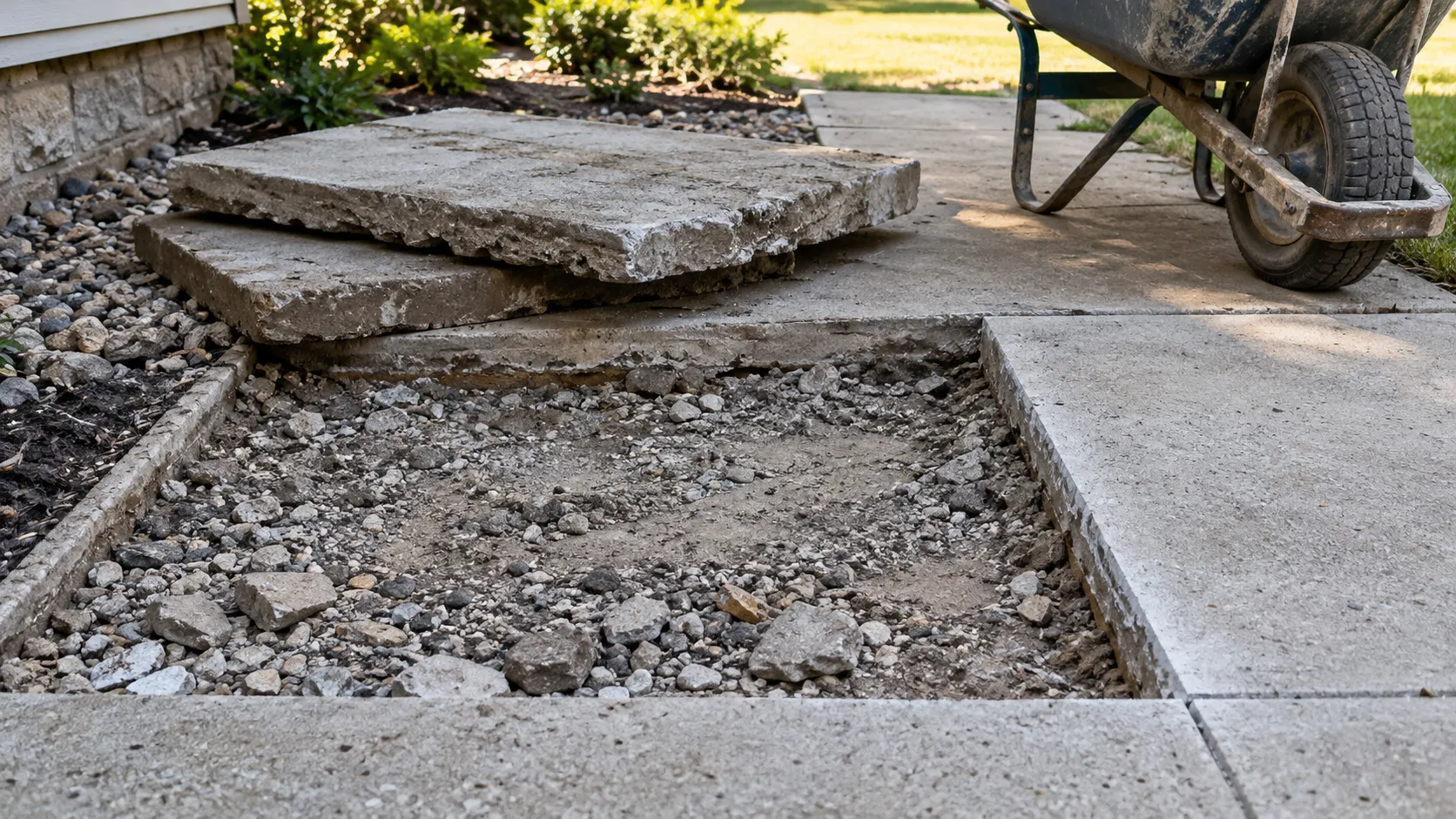
Mark the removal limit
Photograph the full route and mark the panels proposed for removal. Show retained sections, steps and adjoining driveway concrete. Include visible roots or service covers without digging around them. A panel count helps describe the job, but the dimensions and thickness still matter.
Partial removal needs a discussion of the retained edge. A planned replacement may need a different boundary from a simple removal. Keep the future finish in view so the two work scopes join at a sensible point.
Arrange a usable walking route
Work should be planned around access to the property. Identify the entrance people normally use and discuss an alternative while concrete is being removed. Do not improvise a public detour or close a public sidewalk without the required authorization.
Tell the assessor about mobility needs and any entrance that cannot be blocked. Keep the agreed access arrangement in the written scope. It is easier to resolve a narrow passage before equipment arrives than during the work.
Separate ordinary collection from demolition debris
Do not assume a broken walkway belongs in a household recycling cart. Concrete is construction material, and collection arrangements depend on the jurisdiction and receiving facility. Temecula’s published recycling guidance specifically excludes construction waste from that cart.
Ask who handles the load, where documentation will be kept and whether the project has a waste plan. Keep these questions tied to the actual address. County resources for unincorporated land and City rules for incorporated areas are different starting points.
Put the information to use
Concrete Sidewalk Removal scope explains the service boundary. Use the estimate checklist to keep your measurements, photographs and access notes together.
Sources and further reading
Authority and facility guidance checked October 28, 2026. Check current requirements for the actual address and material.