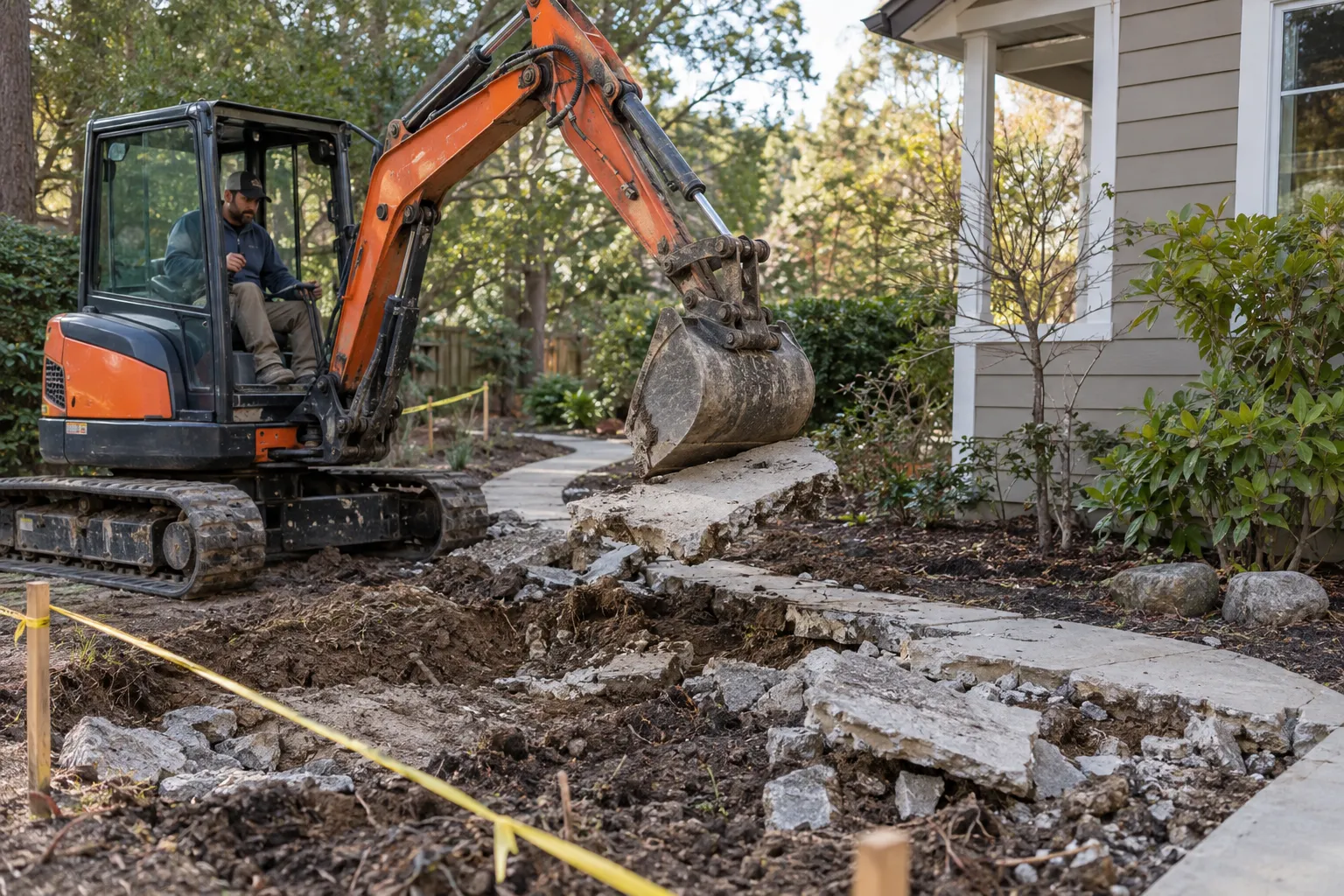
Define the removal area
Show the panels or path sections involved, the connection to steps and driveways, and the remaining walking route. Include trip edges and narrow working areas in the photos.
Check what sits outside the scope
Public right-of-way work, curb ramps and street-side sidewalks may need permits and specific standards. Confirm ownership rather than relying on the position of a fence.
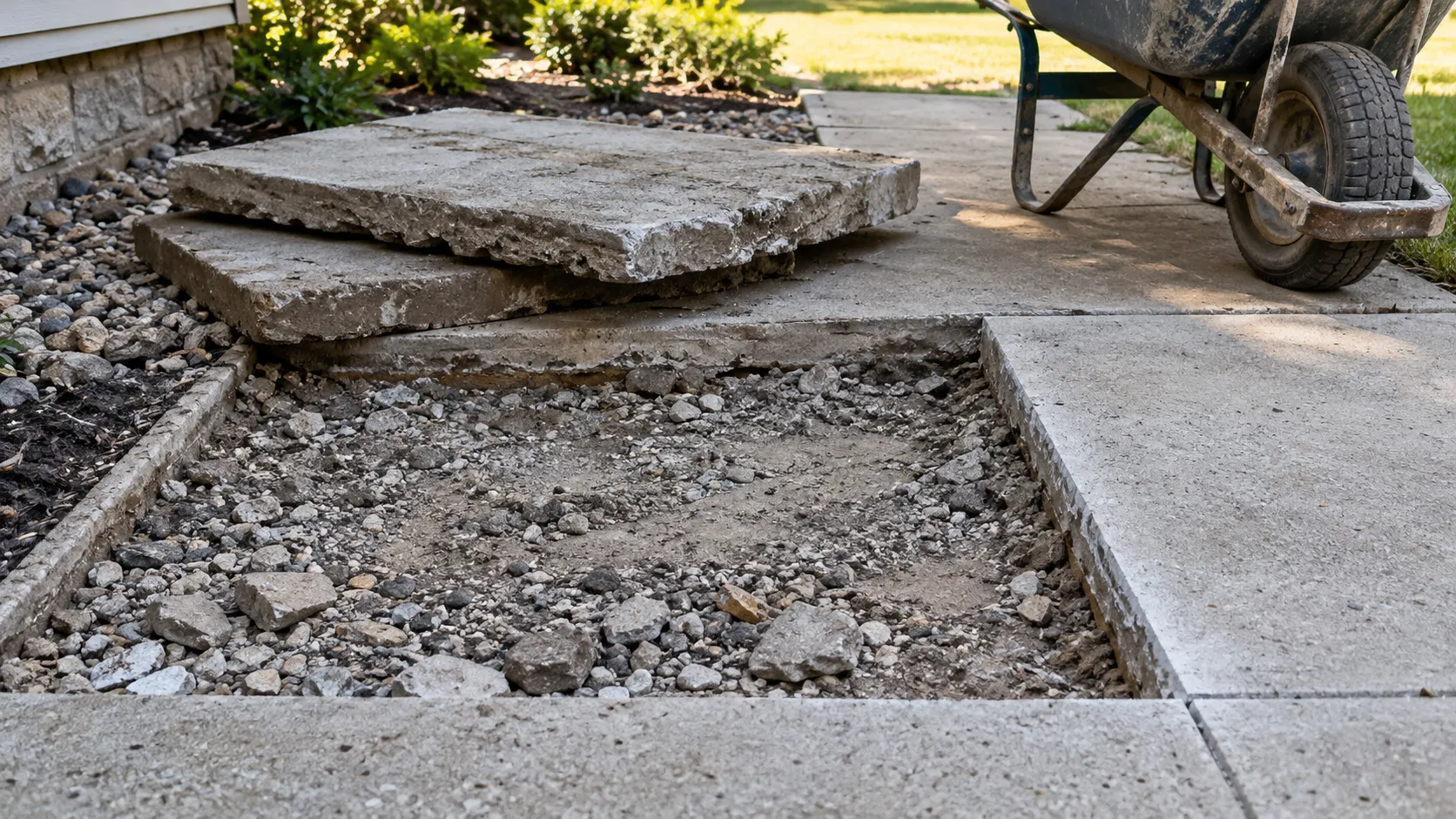
Prepare the access information
Arrange a safe alternative path for people and pets. Keep access to entrances available unless a different arrangement is agreed.
What shapes an estimate
Record panel count, approximate width and length, and the nearest loading location. Tree roots, utilities and adjoining retained panels may affect the plan.
Agree the sequence
Ask for the work to be described in a written estimate: the removal limits, the access method, loading and hauling, and the condition expected at handover. Resolve permit, structural and utility questions before work starts.
If another contractor will build on the cleared area, share their requirements during the estimate discussion. Base preparation, replacement concrete and drainage work need their own agreed scope.
Is a sidewalk beside my property automatically private?
No. Confirm the boundary and authority responsible for that specific section. A private walkway inside the property and a public sidewalk along the street need different planning.
Is replacement concrete included?
Removal and new concrete construction are separate tasks. Ask for each part of your project to be named in the written agreement.