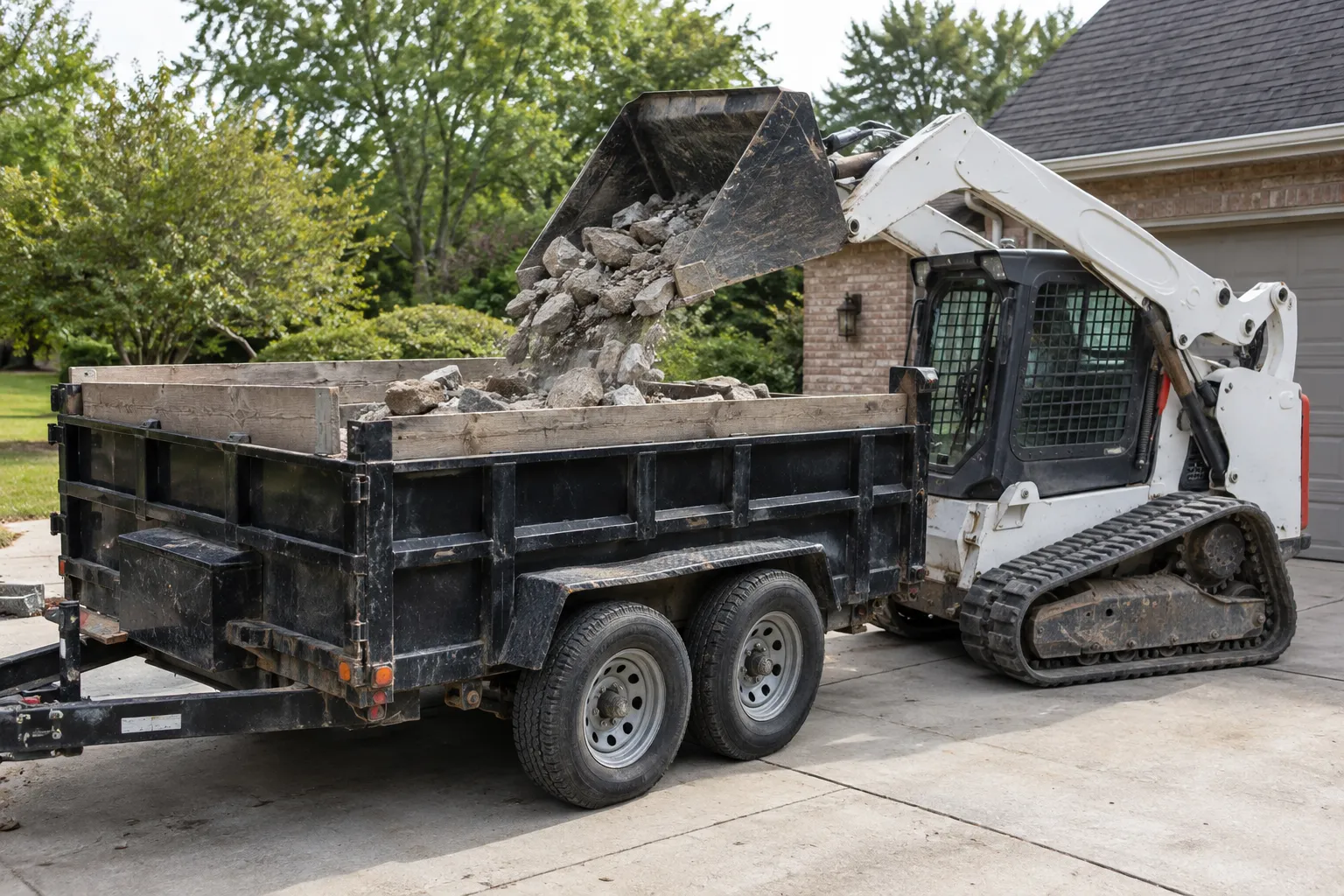
Define the removal area
Hauling-only work covers loose concrete fragments. Tell the estimator whether pieces contain steel, soil, brick, tile, asphalt or other material.
Check what sits outside the scope
Intact slabs need a separate break-out scope. Unknown coatings, suspected hazardous materials and contaminated loads need assessment before any disposal route is chosen.
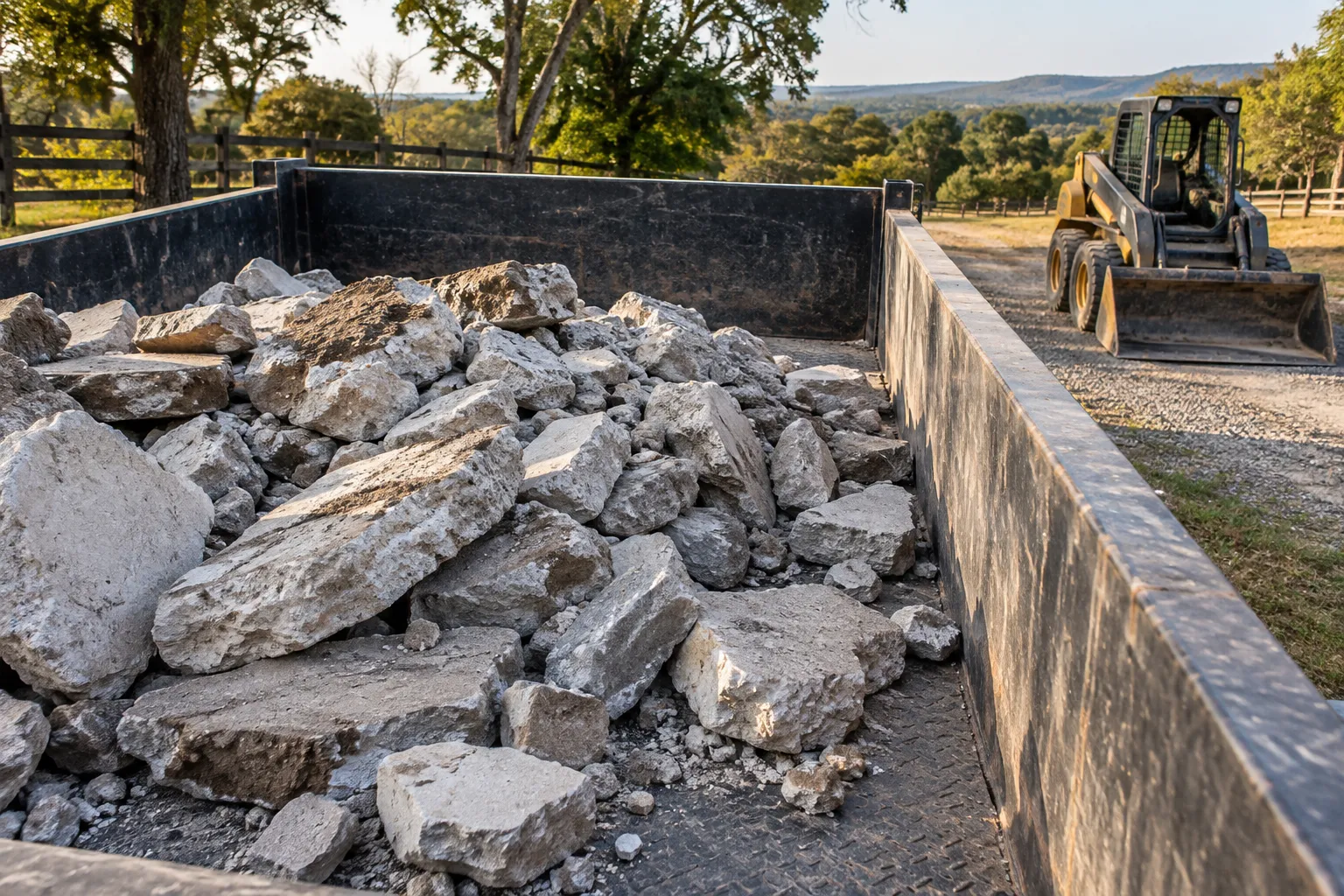
Prepare the access information
Photograph the whole pile and the surrounding loading space. Avoid moving heavy chunks or climbing onto the pile to take a picture.
What shapes an estimate
Pile dimensions, material mix, piece size and loading distance help define the job. Concrete weight and vehicle payload limits matter as well as visible volume.
Agree the sequence
Ask for the work to be described in a written estimate: the removal limits, the access method, loading and hauling, and the condition expected at handover. Resolve permit, structural and utility questions before work starts.
If another contractor will build on the cleared area, share their requirements during the estimate discussion. Base preparation, replacement concrete and drainage work need their own agreed scope.
Should concrete be kept separate from other debris?
Keep existing clean material separate when practical and safe. Receiving facilities have their own acceptance rules, so confirm limits for steel, dirt and other mixed material before loading.
Is replacement concrete included?
Removal and new concrete construction are separate tasks. Ask for each part of your project to be named in the written agreement.